Episode: 437
What No One Tells You About Divorce (From #1 Divorce Lawyer)
with James J. Sexton, Esq.
The ULTIMATE guide on how to handle divorce - for you and the people you love.
World renowned divorce lawyer James Sexton is back to break down divorce from every imaginable angle, and give takeaways that you can implement today regardless of where you are in what he calls divorce’s “six stages”.
James will tell you the five situations where he believes divorce may be necessary, how to tell your spouse the marriage is over, and the 48 hour plan you should have in place before you do.
You’ll also learn how to protect yourself financially, how to choose the right attorney, and how to stop the need for “revenge” from costing you money.
If you are dealing with divorce yourself, this episode will help you understand where you are and what may be next.
If someone you love is going through a divorce, you will learn how to show up in a way that is meaningful.
Either way, the more informed you are, the better you can navigate it.
Listen on:




The grief isn't evidence that the marriage failed, it means it mattered.
James J. Sexton, Esq.
All Clips
Transcript
James Sexton (00:00:00):
The pain isn't optional. There's going to be painful steps you have to take to make it through a divorce, but the damage is optional.
Mel Robbins (00:00:08):
Today on the Mel Robbins Podcast, the ultimate guide to divorce for you and the people you love.
James Sexton (00:00:15):
You're not protecting your children by not getting divorced. What you're choosing is what lesson they're going to learn. Divorce ends a marriage. It doesn't end a family.
Mel Robbins (00:00:26):
From the world's number one divorce lawyer, James Sexton.
James Sexton (00:00:30):
Sometimes happily ever after means happily ever after separately.
Mel Robbins (00:00:40):
Well, James Sexton, welcome to the Mel Robbins Podcast.
James Sexton (00:00:44):
Thank you. It's so good to be here again.
Mel Robbins (00:00:46):
I am so thrilled that you said yes to this because when I first had you on the show and you and I had one of the single best conversations about relationships, you taught me four words and those four words are you're my favorite person. And those four words are the secret to having lasting love. And I'm celebrating my 30th wedding anniversary this year with Chris. And we say you're my favorite person every single day to one another, and it has really improved what was already a really great marriage. And so I cannot thank you enough for not only making a difference in my life, but after that conversation, I said to you, you are the number one divorce attorney in the United States. If Chris and I were getting a divorce and I found out he hired you, I would need a diaper. Not because you're mean,
(00:01:45):
But because you're exceptional. And I said to you after our first conversation, would you come back and do a comprehensive guide on divorce and cover everything? Because most of us, if we go through that or if our loved ones do, would never be able to hire you. And you said yes. And I would love to have you speak to the person who's listening and share with them what are we going to cover today and how do you want them to think about this conversation in terms of it being a life-changing resource for them or people that they love who may be going through divorce or may be considering divorce or may have gone through one and still can't get their power and their life back?
James Sexton (00:02:35):
Divorce is so common, increasingly more common in terms of what we'll talk about later as being sort of the passive divorce where people stay married. They don't do the paperwork, but they just have checked out of the marriage. So really what I hope everyone will walk out of here with today in a very tangible way is the realization that A, if a marriage can be saved, that there are some points where that can happen early on in the process. But if it can't be or it shouldn't be, and those are two different things, that there are ways that we can manage what's happening here. A lot of people treated divorce like the weather, like it's something that happened to them. And that's not true. It's a process and it's a process you have a tremendous amount of control over. So hopefully people are going to walk out of this conversation with real clarity as to the levers that they have control over and the things that they should be looking at.
(00:03:32):
And if you're thinking about it, I think you'll see the distinction, a key distinction between is this broken or is this unattended? Because those are two different things. Is my marriage broken or is my marriage unattended? Because they're not the same and they require two different skill sets to deal with. If someone's in a divorce, meaning they've started one or they're right in the thick of one, I think at the end of this conversation, they're going to spend less money on that divorce. They're going to hurt their children less. They're going to do less harm to themselves and they're going to work better with the counsel that they have. If someone's been through a divorce and they're listening, I think it's going to help them frame where to put that in the Wikipedia page of their life and where does it fit in their self-narrative and in their sense of who they are and what second order effects has it been having and what second order effects in a positive way could it have?
(00:04:37):
What are the lessons that they learn from it? What are the scars they carry? And how do we see that? How do we notice it and how do we use it for our benefit and the benefit of the people around us? And if someone's listening who loves someone who's divorced or going through a divorce or their parents have divorced or one of their children is divorcing or one of their friends is divorcing or someone who they're in a new romantic relationship with went through an ugly divorce, I think I've now just described the entire world, right? But I think those people, it's going to be how can you be part of the structure of this person you loves life? How can you be a support to them? How can you be? Because it's a table. There's this person and their spouse and the lawyer and then there's this other leg, your friends, your family, your community, the people around you.
(00:05:26):
And the thing about tables is if one leg is off, doesn't matter how nice and straight the other three legs are, that table's going to fall down. So I guess when we're thinking about divorce, what I want to say to people more than anything else in this conversation is the pain isn't optional. They're going to either be painful conversations to avoid divorce or there's going to be painful steps you have to take to make it through a divorce or how to place it in your life afterwards. But the damage is optional. The damage is optional and there's a lot you can do. So hopefully we'll walk out of this conversation with a feeling of a little more control.
Mel Robbins (00:06:06):
Well, I have no doubt that we will. That's why I wanted you here. And I want to read to you from your first mega bestseller, How to Stay in Love. This is page 261. And you say, "Sometimes getting divorced is the best thing to do. Sometimes it's the kindest thing to do. Sometimes at the risk of seeming profane, it's the loving thing to do for yourself and for your spouse." What are the biggest signs that you've seen that divorce is inevitable?
James Sexton (00:06:41):
So I'm going to push back on the word inevitable because I think there's two ways we can look at it. When is a divorce necessary and when is a divorce likely? And those are two different things. So sometimes happily ever after means happily ever after separately. So I'm a fan of that. I think there are times where divorce is likely and it's really worth thinking about where am I in that timeline of the likelihood of divorce. But I want to say right at the outset, there are times where divorce is necessary. I actually think there's five times, five specific categories where divorce is necessary. One, abuse. Abuse, physical, emotional, financial threats when it comes to the children and their care. You can't be loved if you're not safe. So situations where there's abuse, divorce is likely necessary. The second one I call the false self, and that's when there's one person in the marriage in one costume.
(00:07:49):
There's one person being themselves and there's one person who's just pretending to be something that they're clearly not. They're pretending to be a good husband, pretending to be a fidelitous person, pretending to be a reliable person. And in fact, they're just not. And there's some revelation that happens where you realize, wait a minute, I'm not actually married to this person. There's one person in one costume in this marriage. The third, I call the stolen reality, and that's where someone has decided they're going to author your life without your consent. You find out that the entire 401k was liquidated for their gambling. That's after it's been done. It's when you find out that they have a second family. It's when you find out that they've been in a relationship with another person for the last three years. That's a situation where you go, okay, what I believed was my reality was a fiction and now I'm just getting caught back up to speed as to what's going on in my own marriage.
(00:08:47):
And you'd be shocked how many times that actually happens to people. And I have a ringside seat to it when it does. The fourth one, it's kind of like an unrepentant repeat, like somebody cheats, somebody says something terrible in the middle of a fight. Anybody who's been married to someone for more than five months, they have what I call the nuclear codes. They have a sentence they could say to their partner that they know would reduce them to tears. And like the nuclear codes, you can't use them more than once and you shouldn't use them at all. The only way to win that game is not to play. But everyone, you've been married 30 years, there's some sentences you could say to him, he could say to you that would just hit all the soft targets. You can't love somebody and not let them see where your soft targets are.
(00:09:36):
So it's like weaponized intimacy. So when I talk about the unrepentant repeat, it's someone who has just engaged in some awful behavior, but the apology has become something they're fluent in. It's just something that they, "I can't believe I did this. I'll never do it again." Six months later, "I can't believe I said that. I'll never say that again." And it just becomes a cycle that it's not ending anytime soon. It's just going to keep happening.
(00:10:05):
And the fifth type of marriage that I think needs to end is, I would call it's the shrinking marriage. And that is a marriage that forces you to just become less and less and less of who you are until there's almost no sense of who you are left anymore, like a marriage that requires you to be smaller, quieter, and less of yourself. The other thing I said in our first conversation was the two wonderful things to say at the end of a marriage when hopefully it ends in death is to say, "You helped me become the most authentic version of myself and you're my favorite person." And I think a good marriage is one that helps you become who you are. So the opposite of that, one that requires you to be something other than who you are
Oprah Winfrey (00:10:52):
In
James Sexton (00:10:52):
A real and increasingly frequent way, that's a marriage you need to have end. But see, leaving a marriage that can't be made safe isn't failure. I think it's not a failure at love, it's defending love. It's defending the love you have for yourself. It's defending the love that you have for your children, and it's defending even sometimes the love you have for this other person who may not realize that they're not the most authentic version of themselves either by virtue of this connection that isn't working anymore.
Mel Robbins (00:11:23):
You say there's six stages, James, to the whole divorce process. Can you list out the six stages?
James Sexton (00:11:31):
Yeah. Yeah. So the first is what I would call the pre-contemplative. I'm less happy, but the thought of divorce hasn't entered my head yet and I kind of haven't connected the two. I don't know what's going on in me, but I'm just not happy anymore. Things just feel heavier than they used to. And I haven't connected yet that, oh, it's my marriage. It's this fundamentally important relationship in my life, in the ecosystem of my life. And you haven't made that connection yet. So that's stage one. Stage two is the contemplative. That's when the word divorce starts to enter your brain, where you start to go, huh? And the danger of that is it's a private trial that happens at 3:00 AM with no defense counsel present. You're just laying in bed going, maybe. I mean, he really did do that. That was really unpleasant. And I did really enjoy it when he was away that one week.
(00:12:36):
And it's a trial you're having in your head with no defense counsel present for the other party, but it's real. It's where you start to make this connection between, hey, my unhappiness and the status of my marriage might be tied to each other in some way. The third stage is I think where you decide, okay, this is it. I think this has to happen. I would call that the moment of decision. And that is where like, okay, the deciding I'm going to do this is over. Now it's like timing, logistics and fear, that's all. When will I do it? Because my business has a busy season. Busy season is right after the kids go back to school and right after the holidays. January 2nd, gyms and divorce lawyers offices are full because everyone's going to lose 200 unwanted pounds this year in the form of their spouse or at the gym, one of the two.
(00:13:30):
And so I'm going to reinvent my life. Again, as if you couldn't reinvent your life on the 15th as easy as you could on January 1st, but this is a moment of decision. Now again, also the holiday ceasefire is over. Everyone's kind of had to keep it together. Sometimes even the happiest marriage can be strained after having family over endlessly and the company holiday parties and all the stuff that you had to do and all the debt you accumulated buying your children, whatever the latest gadget is, and trying to get your spouse a thing that you though they'd like and then they didn't like it as much as you though they'd like it. And even if they did like it as much, you didn't feel as good as you thought you would. So it's one of those things that everybody's feeling not great January 2nd, and that's a time where a lot of people come in.
(00:14:04):
And when the kids go back to school, there's a summer ceasefire that seems to happen where everybody's like, all right, listen, the kids are home. It's kind of a quieter pace. Now the kids are back at school, structure's coming into play, we got to get moving here. Then there's the actually taking step stage. The fourth stage is taking steps. You're actually doing the thing. You went to talk to a lawyer, you've hired a lawyer, the private thing becomes public. You're starting to let people know, yeah, the marriage is ending, the marriage is over, we're in a divorce proceeding.
(00:14:33):
The fifth thing is you're in it, solidly in it. The real deal of divorce, the meat and potatoes of it, a process that makes otherwise logical people sometimes unrecognizable. You're really in the thick of it, what Walt Whitman called the hour of lead, where the heaviness of reality is on you and you're just trying to get through it. And then the sixth stages just got out. You just got out. It's over. The paperwork gets done faster than your nervous system. I think everybody has this attitude when they get divorced of, well, I've been going through it for a year and a half, so yeah, I'm over it. It's like, no, no, no. When the papers actually get signed and everything's officially done and you paid that last bill to the lawyer and now you close the door to the thing, that's when grief begins. That's when healing really begins.
(00:15:26):
And that's the part where a lot of people just want to move on to the next thing and they'd rather get a dating app before they get a therapist and that's backwards. So those are really the six stages.
Mel Robbins (00:15:40):
I want to go through them one by one. So let's talk about the first one, pre-contemplative.
Mel Robbins (00:15:45):
You haven't put the word divorce in your mind yet, but you're starting to feel unhappy, happy, something's off.
James Sexton (00:15:53):
Yeah. The hard part about this is it looks like nothing.
(00:15:58):
It just doesn't look like anything. That's the problem. It's just nothing. There's just a malaise kind of happening. It's not fighting. It's not anger. Anger still implies priority. It's flatness, right? It's not a marriage that's broken. It's one that's been unattended for so long it doesn't look like a marriage anymore. It's like roommates running a daycare center or just roommates with a dog in common, or it's just people that are just, it's a machine running a program that doesn't make sense anymore, but this is the program that we picked. And I said it in one of our other conversations that a lot of people get married because marriage is a tradition. And to some degree, tradition is the wisdom of the people who came before us and the lessons they had to teach us about what has value. And tradition is also peer pressure exerted by dead people.
(00:16:48):
So if you're married because, well, yeah, we're married, that's the thing you do. We're married. Okay, but are you paying attention to this anymore? Does this have value to you anymore? What do you do to add value to it? What value do you derive from it? Is it by default or is it by design? What is this marriage? The pre-contemplative stage for me is nobody's asking questions of each other anymore with an actual question mark in it. The conversations are all about logistics of the day and nothing to do with each other. If you sat down in front of your partner and said, for 10 minutes we have to talk, but it can't be about our jobs, our kids, or something logistical related to our house, would you just stare at each other with the sound of crickets happening? Is there anything really between you?
(00:17:39):
Because when you met, there was you and me and then we, and then sometimes the we becomes everything and the you and the me is completely gone. So the question is when you're sitting across from this person, what's still there? And to me, the most divisive sound starts to appear and that's this sound.
(00:18:03):
All right. Yeah. It's just this sense of contempt, this sense of your partner's an inconvenience. "What are you saying? Yeah. All right, whatever. "That's to me, the sound of the smoke. It's not fire yet, but that's the smoke. That's the pre-contemplative stage.
Mel Robbins (00:18:23):
So if somebody's in that stage right now, what do you want to tell them?
James Sexton (00:18:30):
You can have 10 awkward minutes or so of conversation with your partner or you can let it start to become a flood and then you're going to end up with therapists or mediators or lawyers involved. So I think there's value in looking at your marriage, sitting down with your partner and saying," Hey, can we have a conversation about this, about us? Let's look at what we do. "Because look, you've written books. I've written books. What's a book? Books is like people doing things and saying things, right? Okay. So this is a story we're writing as a couple. What do we do every day? Why do we do it? Why do we do it that way? Why do we put the mugs in the cabinet where we put them? Is it just because the first day when we moved in, we just put them there and then we just left them there because it was like," Oh yeah, that's where the mugs go?
(00:19:22):
"Or was it like," Oh, why are the mugs there and the coffee makers over there? "We never stopped and just went," Yeah, because your brother put the mugs up there when he helped us move in five years ago because it's just, oh, that became where the mugs go. "There's so much of that in people's marriages. So
Mel Robbins (00:19:37):
True.
James Sexton (00:19:38):
Why don't we eat dinner in this room instead of that room? Why don't we put our phones over here when we talk to each other? Why don't we go on Saturdays anymore to the farmer's market together? Why did we stop having sex in the couch? Why did we stop? Why did we stop? Again, there might be very reasonable answers. There might be really good, but just would it take that much to stop and go," Hey, let's look at our life together, our day-to-day. Because again, doesn't matter what I know, it matters what I can prove. I want to see the evidence. Let's look at ourday-to-day life. Let's take a week in our life. Why do we do this this way? Is it by default? Is it by design? If it's by design, great, you're a step ahead. If it's by default, should we maybe do it different?
(00:20:22):
Would it feel different? Would it feel better? Would we feel better? Would it maybe put us in a better place together? And I think there's tremendous value in that. There's an invisible contract that happens in marriages. Why wouldn't you say it out loud? You're bound by it already. Why wouldn't you say it out loud and decide we're the two people to this contract? We can renegotiate at any time we want to if it's not working for either or both of us. So that's what when you take action in the pre-contemplative stage, you can actually do something worth. The conversation you're avoiding is the cheapest today it will ever be.
Mel Robbins (00:21:01):
What do you mean by that?
James Sexton (00:21:02):
The price tag of silence in a marriage can be my bill. It can be millions of dollars, or it could be 10 uncomfortable minutes with your spouse or one uncomfortable afternoon. The price of that conversation with your spouse is the lowest today it's ever going to be. Just say to your spouse, "Hey, are you happy? I want to do a good job of making you happy." And I feel sometimes like we're kind of passing each other. Or you know what? I heard this idiot divorce lawyer talking on Mel's show the other day, and you know what? He said something about how people don't talk about why they do what they do. And I though, I really want to do a good job of being married to you. I really do. I know you do a really good job sometimes being married to me, and I just though it'd be really good for us to have a conversation about that sometime.
(00:21:51):
I don't know a lot of people that would go, "I'm not doing that. I got something else to do." Okay. By the way, if your partner would say that, I'd like to know that. I'd like to know. It's worth knowing if your partner says, "Yeah, I can't spare 10 minutes for this marriage. I'm sorry. I got the games on." Okay. If that's how you feel -
Mel Robbins (00:22:09):
Divorce is necessary.
James Sexton (00:22:10):
Divorce may be necessary at that point. Yeah. So the conversation is the cheapest now it's ever going to be. So have it now. Have it while it's raindrops. Don't wait till the flood.
Mel Robbins (00:22:19):
Well, I love that you said that because I do see a lot of people writing in from around the world saying, "I want to go to therapy. I want to work on it, and my spouse won't go to therapy. My spouse doesn't want to talk about it."
(00:22:34):
And that in and of itself is more evidence about where things are. I'm going to come right out and say it. I am thrilled that JetBlue is a new sponsor of the Mel Robbins podcast. You want to know why? I love JetBlue. JetBlue is my all-time favorite airline. The thing I love most about JetBlue is this experience that they have called Mint. Holy cow. You walk onto the plane, it's in the front section of the plane. If you're going to go on a long haul flight coast to coast or overseas, flying mint by JetBlue, for me, it's like a vacation. I feel as if I'm checking into an eight-star hotel. You have these amazing Y flat seats and fast free wifi. They partner with some of the world's best chefs and restaurants, so you get this three course meal. You cannot believe you're eating on an airplane.
(00:23:22):
You can't believe how delicious it is. So consider mint, a little pre-vacation vacation where you rest, dine, relax, then you step off the plane and you're going to be like, "Why am I even on vacation? I just flew mint." Visit jetblue.com to learn more and book your next trip.
Mel Robbins (00:23:38):
Let's move to phase two, contemplative. This is when somebody actually thinks the word divorce.
James Sexton (00:23:44):
Yeah.
Mel Robbins (00:23:45):
And what do people ignore when they're contemplating divorce?
James Sexton (00:23:50):
So when you're contemplating divorce, there's a list in your head of the problems in the marriage. What I would say is take some steps when the list is at three or four. Don't wait till it's at like 32. That's what a lot of people do. A lot of people wait until this thing is bleeding out before they go past the contemplative stage. Contemplative stage is where you're really taking a fearless inventory of what's really going on in this marriage. What are the problems that we're having? What impact is it having on me? What impact is it having on this person? What impact is it having on our children? Let's be really honest with ourselves about what's going on here. I think having that conversation with yourself is important because sometimes there's an element of grief happening that people don't look at. So things change in marriages all the time.
(00:24:52):
We talked about this last time, how I said one of the two biggest mistakes people make is thinking, "Oh, nothing's ever going to change. Things are so great. We're getting married and everything wi stay the same now because marriage is going to be the moat we dig around this relationship that protects it from the world and the slings and hours of outrageous fortune." And then the other mistake they make is saying, "Oh no, this person will change. They drink too much now, but now that we get married, they're going to get their shit together." Or, "Oh no, this person's really inattentive, but once we're married, they're really going to pay attention to me." Or they have a wandering eye, but once we get married, they won't have a wandering eye anymore. So these are two mistakes that seem like opposites, but they're both legitimate mistakes.
(00:25:25):
Now, the truth is, I do think sometimes change happens, right? In the 30 years of you and your husband being together, think of how many
(00:25:37):
Losses, how many victories, how many little deaths and how many huge changes, physical changes in both of you, your children, everything, your environment, where you live, economics, so many things. And by the way, some completely forces beyond your control, pandemics, economic crisis, all kinds of things happening, right? Okay. So if you're in the contemplative stage now, I just want you to pause for a second and think about the last 18 months. What's happened in the last 18 months that you're feeling this way that could be impacting? Because here's the thing, when someone is grieving something, the loss of a parent, a child going off to college, loss of a pet, a change in their employment situation, sometimes it resurfaces 18 months later in a different costume.
(00:26:35):
You just start blaming, because who's around you all the time but your spouse? And your spouse is a whole lot easier to get annoyed at than fate or God. Who am I mad at? Your dog dies. Who are you mad at? God? It's hard to be mad at God. You know everyone you can yell at really, right? But your spouse not being supportive of you, not helping you through this process, just not being there for you, not creating an environment where you can feel like you can cry if you need to or making you feel self-conscious or feeling like you have to carry the emotional load of their life and you have to keep their chin up because they're not going to be able to. Okay. Again, look at what's going on and say, okay, wait, how much is the marriage and how much is.
(00:27:17):
Because man, the answer might be, yeah, marriage. But look at that 18 month lead up period and pay some attention to what's gone on in your life that might have impacted what's happening.
Mel Robbins (00:27:27):
Who should you confide in if you're contemplating divorce?
James Sexton (00:27:33):
Well, I'll tell you first who you shouldn't confide in. Not social media. Run screaming from social media. Don't lean on the group chat. Do not lean on your kids at any age. I don't care if your kids are eight or 15 or 40. Don't lean on your kids when you're in that stage. Don't say to them, "Do you think I should get divorced?" These are not the people you should be talking to. So I would say one, a therapist individually. Get a mental health professional, hire a therapist. Again, one that genuinely challenges you. Anytime I meet somebody and they're like, "Oh my God, I love being in therapy," you're doing it wrong. If you love it 100% of the time, you're doing it wrong. I'm not saying you shouldn't every once in a while have one of those sessions where you go like, "Yeah, I've made some progress.
(00:28:23):
This is good. We're doing a good job." But a lot of the time it should make you kind of uncomfortable because the only question worth asking when you go into therapy is what is it I'm afraid to feel? What is it I don't want to feel? And why am I so afraid of it? And what would happen if I felt it? And what is it I don't want to look at and why? Why don't I want to look at it? Why is it still there? Why is it still carrying around? Why has it become a backpack that's holding me down? So the first thing in this situation, in the contemplative stage, get a therapist. Get a therapist who's going to get to know you and get to give you a very honest perspective on things. And then I think you need one friend, like one, but it's a person with no skin in the game and who's proven that they can keep their mouth shut.
(00:29:15):
You want that one friend and then a lawyer. Go see a lawyer. You don't have to. When you go see a lawyer, you don't have to hire a lawyer. I can tell you how many people come in and they meet with me and they go, "Okay, I'm ready to hire you." And I'm like, "Okay, I'm not retiring anytime soon." Come in for information. Learn about your rights and obligations potentially. Learn about how the law. Because most people, by the way, again, you buy a house, you get a HUD-1, lead paint disclosure, all these things. You married, you need to get a pamphlet. Most legally significant thing you're ever going to do in your whole life other than die, and you don't even get a one sheet. You got nothing. The first time people learn what happened legally when they got married is in my office when the whole thing's falling apart.
(00:29:58):
Why not go to a divorce lawyer Sooner rather than later, attorney-client privilege attaches. No one can know that you saw me. If I see you on the street, I'll pretend I never met you." Go talk to a lawyer and just say, "Hey, listen, things are kind of. I just want to know what would this look like? What might the issues be?" And then you can give me the ingredients. Tell me, "Here's what's going on. This is what we have. These are the accounts. This is ourday-to-day routine. This is who takes care of what with the kids." And I can say, "Okay, here's the different paths you might take. Here's the different..." Good lawyers, experienced lawyers, "I want you out of my office. I do not want to make money on you. I want to send you to a therapist. I want to send you to a mediator.
(00:30:41):
I want to send you to a process that is going to not be me because I'm a weapon. I'm a weapon." They're going to do it with a scalpel. I'm going to do it with a chainsaw. Don't do it with a chainsaw. There is nothing you can do with a scalpel that you should do with a chainsaw. That's insane. So a good lawyer is going to explain to you upside, downside, all the different paths. So again, what is all this we have? We have the psychological ingredients with our therapist. We have someone we can confide in the form of that one friend who's a vault for us, who's going to be able to listen and they've proven to us that they're trustworthy. We have a lawyer who's going to tell us what's going on. And then the fourth most important person to talk to, your spouse potentially, like your spouse.
(00:31:27):
And that's the scariest conversation, but it's actually sometimes the cheapest way to do things. Sometimes people don't realize, okay, we had the pre-contemplative conversation. What's going on in the marriage? How are things? Maybe now is the time where we start to have the, hey, listen, I'm really feeling like something's going to have to change. Maybe we don't have to say the word divorce yet, but we can start saying, I feel like this is either the beginning of the end or the end of the beginning and we still have a chance. So what can we do, if anything? Because what outcome do you want? That's counsel. The friend, the lawyer, the therapist who says, when you say, I'm thinking about getting divorced, and they go, okay, what do you hope to get from that? What's the outcome you want? That's counsel. Take him for everything he's got, that's entertainment.
(00:32:19):
That's entertainment. That's someone just using your life as their entertainment or to work their stuff out.
Mel Robbins (00:32:26):
How do you raise it with your spouse? Because I've been shocked by the number of people in my life that told their children before their spouse.
James Sexton (00:32:36):
That's insane. But people will come into my office, they'll do the consultation, they'll retain me, we'll file the papers, their spouse hires counsel, and then they'll come in and they'll say, "Yeah, so we're going to sit down the kids tomorrow night and we're going to talk to them." And I go, "Why?" "Well, we just want to let them know. "I'm like," Okay, so I'm your 10-year-old. Where are you going to be living? Where is mom going to be living? Where's the dog going to live? When am I going to see you? What days will I this? Are we still going to go to Cape Cod in the summers? Are we going to do the. Guess what? You don't know the answer to any of those questions yet. Not one. So if your job as a parent, one of your jobs is to help your children feel like there's some sense of control in the terrifying world, the worst thing you can do is say to them, "Mom and dad are splitting up.
(00:33:26):
Kind of don't have more information than that for you at this point, but we'll get back to you in the next couple of months." It's a cruel thing to do. So realistically, can you start shaping your family dynamic in a way that might transition more easily to divorce? Sure. Start spending some more time with your kids separately as opposed to together, maybe going away for the weekend with the kids for vacation separately. So it's not as far and you can say, "Well, remember when we went and it'll be like that from now." Or, "Oh, remember when, or dad was away for work for that week? Remember that was, well, dad was..." And he comes back, you always see him.
Mel Robbins (00:34:00):
How do you tell your spouse?
James Sexton (00:34:02):
Well, I like the way you parse that, which is tell your spouse. Because people often say to me, "How do you ask for divorce?" And I always tell them, "You're doing it the wrong way if you're asking for a divorce." I would say one, be certain because you can't unring this bell. Once you tell your partner we're getting divorced, you can't really unring that bell. So don't say it on a whim, right? Don't have that conversation at night. Don't have it when anyone's been drinking. Don't have it on a holiday. Don't have it at a restaurant. People think that having it at a restaurant's a good idea. I don't know what movie somebody said. Oh, when you have a difficult conversation or break up with someone, do it in a restaurant because they can't make a scene. No, what they have to do is publicly keep their act together because people are watching.
(00:34:49):
It's cruel. It's cruel to do it in a restaurant. So don't do it in a public setting like that. Again, don't do it when anyone's been drinking, using cannabis, anything like that, any altered state of mind. Don't do it at night. I don't think that's the best time to do those kinds of things. Don't do it on the holiday. Say it in the first 10 seconds. No preamble. That's it. Don't have a preamble. Say it once and clean and then stop talking. I have given this a lot of thought and our marriage needs to end. Okay? That's hard. Those are hard sentences to say, but they're clear. They're not a question. I think maybe we need to. I understand you're trying to be compassionate. There's nothing compassionate about giving someone false hope. If you've decided the marriage is over, the marriage is over. So say it in the first 10 seconds, no preamble, then stop talking because reasons invite rebuttal.
(00:35:43):
So don't give a bunch of reasons because if you say, "Well, listen, we don't talk like..." Well, we don't talk like we used to because you're never home and you're working all the time. Now we're having a debate, a debate about the demise of our marriage. We should have had that already. We could have had that in the first two phases. If we've decided now, if you've decided now this is over, it's over. By the way, own your share first.
Mel Robbins (00:36:03):
What does that mean?
James Sexton (00:36:04):
It's like the movie Eight Mile with Eminem, that scene at the end where the final rap battle and he gets up and he's like, "Yeah, I am a bum. I do live in a trailer with my mom." He says all the bad things about himself and he goes, "Here, tell these people something they don't know about me." I love that. I do it in the courtroom all the time. Same thing in this, own your part first. Listen, I'm not a good husband to you. I'm not doing a good job of it. I don't feel I can be. It's pretty clear to me. It's become increasingly clear to me that I'm just not who you need to be married to and I'm not capable of making you happy in a way that you deserve to be happy. Own your piece of it first. Apologize for your piece of it first.
(00:36:40):
I know I never meant to hurt you. I'm certain of that, but I also know that I have hurt you and for that I am profoundly sorry, but I'm not going to double down on that pain by continuing to hurt you. Clear, concise, precise, honest, even if it's a little painful. And then I think have a 48-hour plan. I know that sounds kind of cruel and tactical, but know where you're going to stay. Maybe if this person needs space, give them some space. Know where the kids are going to be, make sure they're out of the blast radius. Try to give though to the fact that you're about to have a big moment. And I think it's smart to plan about that. It's page one of what your children's memory of this is going to be. So I think it's really important if you have kids, and even if you don't, how things end sometimes can shape how we remember them in their totality.
(00:37:32):
I don't think that's always fair, but I think it's true. So I think clear, clean, precise, but don't invite reasons. Don't invite rebuttal. You can't unring this bell, but this is not a request. This is not a negotiation. I'm telling you a decision. That's it.
Mel Robbins (00:37:53):
What are some of the things to think about? Because you live together, you have kids maybe. Maybe they're at school. You're doing this in the morning. I love that you're telling us do not ask for one. I love the 13 words you used. I have given this a lot of though. Our marriage needs to end. And then stop talking.
James Sexton (00:38:10):
Stop talking.
Mel Robbins (00:38:11):
And then your counsel is own your part of it. I can't be the person that you deserve. I am going to make this worse if I double down. I apologize. I never meant to hurt you. How often do you think people don't know this is coming or they get quote blindsided or if they're blindsided, are you like you've been asleep in your marriage and that's -
James Sexton (00:38:31):
Yeah, there's blindness and there's willful blindness. There's the blindness of, oh my God, I had no idea. And then there's the blindness of I would've if I was looking and I intentionally didn't look because I didn't want to see what I knew I would see if I looked. So I think those are different things.
Mel Robbins (00:38:46):
I want you to say that again because I think you or the person that you love needs to hear that.
James Sexton (00:38:53):
Well, blindness really is that I just didn't see at all any of this and I think that rarely happens in marriages. I think willful blindness is I wasn't looking and I wasn't looking because some part of me knew what I would see if I looked and I knew it was something I didn't want to see. I knew if I checked your messages, I would see messages I didn't want to see. I knew that if I looked at where the money was going, I wouldn't like to see where it was. I knew that if I asked, "Are you happy? Do you really love me or not?" I've shared this before, my ex-wife and I, our marriage ended because we were sitting at the kitchen table together. The boys were very little boys. They were four and six. They were upstairs asleep and we really cared a lot about each other and we were sitting at the kitchen table and I'd made her a cup of coffee and myself a cup of tea.
(00:39:45):
I looked at her and I said, "Can I ask you something?" She said, "Yeah." I said, "Are you happy?" She just looked at me and she went, "Do you really want to do this now?" I said, "I don't know. I think it's as bad a time as any." She said, "Not really." I said, "I'm not either." She said, "Well, what the hell do we do?" I said, "I have no idea." I said, "I know I love you." She said, "Yeah, I know I love you too." I said, "But I don't think this is working." She's like, "I think if sheer power of will could make two people love each other, we would love each other forever, but yeah, I don't think this is working." It was the start of a very difficult chapter and moment, a lot of tears, moments of anger, moments of regret, but it was also the start of something that needed to end.
(00:40:39):
It started, that end started with a question, "Are you happy?" I think I knew I was asking that question because I knew the answer. She knew I was asking that question because she knew I knew the answer. The answer if she'd asked me was, "Yeah, I'm not happy either." She said to me, she's like, "I'm Irish. I'll stay miserable forever." But the truth is I was going to be the one to ask it because she wasn't going to be the one to ask it. I would say that I think blindness to it is sometimes a very convenient lie that we tell ourselves that there's nothing to look at. But anytime somebody says to me, "Don't look in that drawer," that's the only drawer I want to look in because that's the drawer there's something interesting in.
Mel Robbins (00:41:19):
Hey, it's Mel. I have a crazy amazing invitation. I want you to come to Vegas with me and Oprah Winfrey.
Oprah Winfrey (00:41:24):
And Oprah, please come because it's going to be the ultimate aha experience using the sphere as a lighthouse to really ignite the light within people. They're going to feel something really profoundly with a sense of knowing your greater value to the planet, to intention, to your calling and your purpose. That's the whole idea.
Mel Robbins (00:41:49):
Holy cow, it's at the sphere, April 2nd through the fourth. You do not want to miss this. It's going to awaken something incredible in you. You're going to get exactly what you need, connection, inspiration, holy cow. Community. Your mind is going to be blown. Aha, April 2nd through the fourth, live at sphere, a call to wonder, to joy, and the ultimate aha. Visit ahalive.com for presale signup and travel packages, and you better go fast. I already got my tickets. I'm going with my daughters and some friends. Oh my gosh, I'll see you in the audience.
Mel Robbins (00:42:26):
What about the idea of staying in a marriage for the kids?
James Sexton (00:42:32):
So staying in a marriage for the children isn't something people are actually doing a lot of the time, because your children are in the marriage with you. And the question is not, are their parents divorced? They're not going to remember whether you stayed or not. They're going to remember what your marriage looked like. They're watching everything you're doing. My dad sat there when I was a kid telling me, "You definitely shouldn't smoke. It's bad for you," while smoking a cigarette. And you will be surprised to learn in high school I started smoking cigarettes because I could hear him. What he did spoke so loudly, I didn't have to listen to what he was saying. I think that's what you're doing. You're modeling for your children what marriage should look like. Would you want your children to have your marriage? That's a very hard question and a really important one for the pre-contemplative and contemplative stage.
(00:43:21):
If my daughter's marriage looked like this, would I be happy on her wedding day? If I could look at a crystal ball and see this is what my son's marriage was going to look like 10 years in, would I want him to get married or would I say, "Hey, maybe you should rethink this." Okay, you do that for your kids because you love them. Well, love yourself. Love yourself enough to look at it and to say, "Is this what I want to model for my children? Is this how my husband is treating me? Is this how I want my daughter to believe a man should treat a woman? How my wife speaks to me? Is that how my son should think his wife should speak to him or how she should relate to him? Is this the love we want our children to see?" Because the truth is what am I modeling and can I change it in this marriage?
(00:44:13):
Is it possible to change it? You're not protecting your children by not getting divorced. What you're choosing is what lesson they're going to learn. So can they learn the lesson that two people can end a marriage and still have affection for each other and still love their children and co-parent in a productive way? That's a valuable lesson to teach someone that things end and that sometimes when they end, it's okay because things are supposed to end and make room for new things because every new beginning came from some other beginning's end. Isn't that a lesson worth teaching children? So high conflict family dynamics, whether they end in people staying together and gutting it out for the kids or whether it's a conflict filled post-divorce life where people have a contentious co-parenting relationship, yeah, it's bad for kids. It's bad for kids to have loyalty bonds and parents who hate each other and who weaponize their affection for the children against each other.
(00:45:13):
Yes, it's terrible for children. That doesn't have a lot to do with divorce. That has to do with how you approach divorce. That has to do with how you approach your co-parenting relationship, but staying together "for the kids" is very often, "Yeah, I just don't want to do this. I don't want to go through the pain of this." There's never a good time to do a really difficult thing. But the question becomes, do you want to wait until your children are teenagers, until your children are already dealing with their own challenges there, or do you want to do it earlier on in the process when again, we don't know who discovered water, but it wasn't a fish. Talk to somebody whose parents got divorced when they were three. They're like, "Yeah, my mom lived here, my dad lived there. I don't really remember my parents being married to each other." So I think that divorce is never free for children ever, but the question of what relationship you're modeling for your children, I think is the key question.
(00:46:06):
More important than is divorce good or bad for kids?
Mel Robbins (00:46:10):
Well, the measuring stick of stepping outside your marriage and saying to yourself, "Would I actually be excited if my daughter was in this marriage or would I want her out of it? Would I be excited if my son was married to a person that treated him the way I'm being treated or would I want him out of it?" That's your answer. I want to go back to that 48-hour plan. Can you just tell us what are the things on the checklist as you're thinking about, "I'm going to say the 13 words, I'm going to make a decision and say, this is my decision. I'm not asking for a divorce." What is the 48-hour plan because you're about to drop a bomb?
James Sexton (00:46:50):
Yeah. It should be, first of all, where are the kids and where are they going to be? Are they at grandma and grandpa's? Are they someplace that they're out of the blast radius? That's ideal because no one's going to be feeling great after this conversation and it's good that the kids are out of the way of it. Two, you don't necessarily want to go back to the same location with this person. You are the least qualified person to help someone navigate you breaking up with them, ending that relationship. You're not going to be able to do that, so don't try. And putting yourself in physical proximity to that person is inviting more conversation. So again, don't kick them out of the house, stay someplace else. Maybe they don't want to be in the house because it's going to make them think about you and the situation.
(00:47:24):
No problem. I'll stay in the house, take care of the dogs. You can go to a hotel. Create options for a person.
Mel Robbins (00:47:30):
Now, what are some things logistically you should have done before this? Make copies of some of the important financial documents or at least know where things are. Consider the possibility that this person might react poorly, and if they did, what would you be cut off from access to? So do I have some money, some access to money, either to get counsel or if I haven't already ideally talked to a lawyer before I drop that bomb, what do I have available to me? And also, again, get yourself out of this person's path. Let this person calm a little bit or fester a little before they come. It should be very logistical, that 48-hour period. It should be very much about how do we keep the kids and each other out of the blast range for everybody to start internalizing that this thing just happened. Look, there's punctuation marks in life.
(00:48:24):
Your kid is born, you get married, some big thing, this is a punctuation mark. Everything that comes after this is everything that comes after this. So everything that happens is from now on at that point. So you have to really see it as that and treat it with that kind of reverence.
Mel Robbins (00:48:42):
I think it's incredibly important that you said make sure you have copies of financial documents, that you have logins to thing, that you have backups, because you don't actually know how somebody's going to react.
James Sexton (00:48:54):
No. No. And it's very rare in a marriage that both people have equal access to the financial information and equal interest in it. It's very often that like, oh yeah, she likes doing the investment stuff and I'm not into that, so I just put my checks in the thing and then she does all that. Okay, you don't know where any of your money is then. And again, I'm a fan in marriages. I don't think marriages should be, we have to do the exact same things. If I love to cook and you don't love to cook, I'm not going to say, "Well, I'm going to give up cooking half the time, which I love, and you should have to cook half the time, which you hate so that we can be equal." No, I'll cook. I love to cook.That's great, but there's something else. You should know how to cook something.
(00:49:34):
If I go away for a weekend, you shouldn't be like, "Well, what do I do now?" There has to be some sense of, okay, you might not be really into how do we do our trades and what's our exact asset allocation? Where is our money? Roughly how much of it do we have? Roughly how much is retirement and roughly how much is liquid? What's the name of our financial planner? Do you have life insurance? Who's it with? There should be some basic snapshot that you have so that if something. Again, even if you're happily married and never going to get divorced, your spouse could die. So you need to have a general sense of where your assets are and what they look like.
Mel Robbins (00:50:11):
You said stage four is taking steps. Tell me about it.
James Sexton (00:50:14):
Yeah. So look, a divorce ends a marriage. It doesn't end a family, and you're restructuring a company that you're going to co-own for the rest of your life. So the sooner that you think about that, the better. I often will tell clients, even if they have a two-year-old, I'll say to them, "Listen, there's going to be a wedding. It's probably like 20 plus years from now, and what we do at this table is going to dictate what that wedding looks like. We're going to create the architecture of that wedding." So not every hill should be the hill you're willing to die on. Identify pretty early on in this process what are the goals? Write them down. Give them to someone you trust and have them read them back to you when you lose sight of that, because you'll lose sight of that from time to time in this process.
Mel Robbins (00:51:02):
I don't think I've ever heard anybody say that you should write down your goals for getting divorced. I mean, I think it's a really important thing because I think having not gone through it, I will just tell you my impression, no offense to you, is that
Mel Robbins (00:51:21):
There are divorce attorneys that seem very much like, "Let's come to an agreement. Let's work this out." There's a messy way, there's a brutal way, there's a collaborative way. And I would think that the vast majority of divorce attorneys are probably wanting to try to help a couple sort this out. But I think the thing that most of us think if we've never been through one is you get the attack dog, you fricking aim it at the other person, kill, kill, kill.
James Sexton (00:51:53):
So what you need is a very interesting and prodigious amalgam. It's kind of a
Mel Robbins (00:51:59):
Union - I don't even know what those words mean.
James Sexton (00:52:00):
So what you want is you want someone who is capable of legal violence, basically. You need someone who's very good in a courtroom at doing what needs to be done in a dispassionate fashion. I've been described as the sociopath you want on your side because I will take a person apart in court, no problem. That's the job sometimes. But what you want is someone who has the ability to do that and wants more than anything not to have to. See, many of the divorce lawyers that are out there that advertise themselves constantly as, "I will help keep this friendly. I want your divorce should be a friendly divorce." They're afraid of court. They've never heard the six magic words, "Please call your first witness." And if they heard those words, they don't know what to do with themselves. And I know because when I have cases against them, I make sure they hear those words because then they're going to play let's make a deal.
(00:52:57):
So what you do is people make the mistake of thinking, "If I hire a litigator, I'm going to end up in litigation." And the answer is actually no. If you hire a litigator, the chances of you going into litigation get exponentially smaller.
Oprah Winfrey (00:53:12):
Why?
James Sexton (00:53:12):
Because when you put me up against another skilled litigator, we both know at the start of this thing what it's going to look like. I know every argument they're going to make, they know every argument I'm going to make, and we look at it and we go, "All right, look, you're going to do this. I'm going to do this. We know this judge. This judge is going to do A, B, and C. Let's just get there right now." I had a case recently, $8 billion marital estate. We settled it in a month with four phone calls because my adversary is a lawyer named John Titler, I consider probably the best divorce lawyer in the state of New York, and he's very, very skilled, and we both know what the other one could have done. We both just went, "All right, look, you're going to do this.
(00:53:48):
I'm going to do this. Let's save everybody the trouble." Now, if on the other side of that case, there had been someone who doesn't know what they're doing in a courtroom, either he or I would've eaten that person alive. There's a school of though that says, "Cops carry guns so they don't have to use them." You want to hire someone who is capable of making it through an ugly divorce and protecting you, but who is not going to do anything to increase the chances of this thing getting ugly, who takes it as their task to not use this. I will beg people, "Don't make me do this. If there's a way to avoid it, don't make..." Because my feeling has always been when it comes to violence of any kind, and I've been trading Brazilian jiu-jitsu for 20 plus years. I love to fight. I fight for fun.
(00:54:36):
I fight in a courtroom for a living and then I fight on a mat for fun. And what I tell people all the time is, "Listen, don't fight. Don't hit people. Apologize. Lose face. Who cares? Don't worry about it. Walk away. But if you have to hit someone, hit them so they don't get up. Don't hit them softly. That's stupid. You're just going to make them angry. Don't tell them I'm about to hit you because it's going to give them a chance to run away or hit you first." So the truth is you want to hire counsel. All of these attorneys that do all this advertising of divorce doesn't have to be difficult. If one person in the ecosystem of your divorce has decided this divorce is going to be difficult, your divorce is going to be difficult. So you want to have a full toolkit.
(00:55:17):
So that's why a lot of people, I'm their second lawyer because the first lawyer was like, "We're just going to hold hands and sing kumbaya." And by the way, it'd be great. It'd be great. If you could mediate your divorce successfully, you should. There's no question in my mind, but that's not how it works. It's not the right tool for a lot of situations. And again, you don't get to make that decision yourself because the other side, your co-parent, your spouse, they get to decide if they're going to be as reasonable as you are too.
Mel Robbins (00:55:48):
If you're writing out your goals, because if I'm trying to put myself in the shoes of somebody getting divorced and I don't want to blast them into hell and just spend all the money just torturing them and dragging this out. But there's a lot of people who do. But if you were to write the goals, for me, it'd be like amicable split, kids are okay.
James Sexton (00:56:10):
But see, what you're describing right there is emotional states and feelings, and that's great. It's
Mel Robbins (00:56:15):
Probably not surprising either.
James Sexton (00:56:17):
Yeah, those are really important things.
Mel Robbins (00:56:18):
Okay, but what are the other goals?
James Sexton (00:56:21):
Where do I want to live? What resources do I need to have to be able to maintain a life that's going to be safe and comfortable for me and for my children? Where are our children going to go to school in proximity to where I live and their co-parent lives? What should the rotation of our time with our children look like? Realistically, economically, what do I need and what do I want? Which by the way, what do I need? What do I want? What am I entitled to? Three different questions. What you need, most of us are going to have what we need. Food, shelter. It does not take as long as it used to meet those needs in a particular day, and it doesn't cost quite as much. So what you need, you're going to be all right. You're going to be all right.
(00:57:00):
What do you want? There's no limit to what a person could want. So what you want should be informed by what you're entitled to, and lawyers are exceedingly good at explaining to someone what they're entitled to. So once I've explained to you what you're potentially entitled to, there's certain aspects of it that's crystal clear what you're entitled to, and there's certain that there's discretion, but there's a range. I can explain the range. I can tell you what the range roughly is. Maintenance alimony is going to be about this long, this little, this much. It could be around this amount, but it's a range. I can explain the range. Make your goals early on, write them down, lock them in so that it doesn't. There are people in divorce who will spend $10,000 in legal fees arguing over an $11,000 bank account. And guess what? If you won, you didn't win $11,000, you won a thousand dollars.
(00:57:44):
And if you lost, you didn't lose $11,000, you lost $21,000. Like this has a price tag and you got to figure out what's that price tag? Front load that. Think about that from the beginning. I tell every single client in every single consult I have ever done since the first consult I've ever done, so this is now thousands of consultations, I say to everyone, "I would rather you pay her than pay me. I would rather you pay him than pay me." I used to say, "I'd rather you put your kids through college than mine." But now my kids are through college, so I can't use that one. But a good lawyer is going to tell a potential client that from the jump.
Mel Robbins (00:58:26):
How do you manage your emotions when you are dealing with somebody on the other side who is nasty and is just out for war? How do you stay grounded knowing this is a person who is going to just drag this out?
James Sexton (00:58:47):
Yeah. So it's really important to remember that a divorce is the architecture of your post-divorce life. It is not the final argument in your marriage.
Mel Robbins (00:58:57):
Wait, what does that mean?
James Sexton (00:58:58):
It's not the final referendum on who was right and who was wrong in the marriage, who was a good person and who was awful. Whose fault was it that this didn't work out? You're not going to have a Perry Mason moment where this person realizes, "Oh my God, you're right. I was a terrible husband or I was a terrible wife." This is not the final act in the play of your marriage and you want to be the hero in this chapter or this scene in the play.That's not what this is. This is logistics. This is who gets what? When do they get it? How do they get it? Where are the kids going to be? When will they be there? This is logistics. This is not the committees on fellowship and reconciliation where people get up and announce their pain and they hear each other's pain.
(00:59:48):
Again, do I think there's value to that? I think there'd be tremendous value to people telling their stories and listening to their spouse's story. I think it'd be amazing if lawyers were free. I'd be like, "Yeah, let's try every single case so that people People can be heard and tell the story of the marriage from their point of view, but that's not how it works. So the sooner that you approach a divorce as the logistics of uncoupling, undoing the legal status that was done on the day you said, "I do," and thinking about the architecture of your post-divorce life, the happier you're
Mel Robbins (01:00:19):
Going to be. I think that's really helpful, extremely helpful, that you could remind yourself this isn't right or wrong. The marriage is over. We're arguing about logistics.
James Sexton (01:00:30):
That's it. Yeah, it's a business transaction. It's so hard to say that to people because I am not minimizing the emotion of a divorce. I'm not at all. I understand the pain of heartbreak deeply. You know that. I was crying. How many things have I cried at? I'm very emotional. I'm very sentimental. There is a time and a place to mourn the beauty of love and how it fades and goes away. There's so much value in that. The legal process is not the place for that. The legal process is a place for the logistics of it. It's for the architecture of it. It's for the architecture of your post-divorce life. And the sooner as you start to look at it like a business transaction, the better.
Mel Robbins (01:01:13):
I want to talk to parents and grandparents who are watching right now because school's now started, and you probably have a better sense of where your kids are thriving and where they may need a little extra support. So I'd like to tell you about our sponsor, IXL. IXL is an award-winning online learning platform that helps your kids truly understand what they're learning. And it's for kids from pre-K all the way through 12th grade. They offer personalized interactive learning that adapts to your child's level, pace, and learning needs, whether your kid needs more practice with a challenging concept or they're ready to keep progressing. That way your kids can practice what they're learning in school. It reinforces the concepts that they know, and they can spend more time on the skills where they need a little bit extra support, and that's going to help them build confidence along the way.
(01:02:00):
You can make an impact on your child's learning by getting IXL right now. And the Mel Robbins Podcast, listeners, that's you can get an exclusive 20% off IXL membership when you sign up today at ixl.com/mel. Visit ixl.com/mel to get the most effective learning program out there at the best price. Stage five is I'm in it. What is the most common mistake you've seen people make who are in the middle of a divorce?
James Sexton (01:02:28):
The biggest mistake I see people making when they're mid through it, when they're like what I said, stage five, the I'm in it stage is trying to get a feeling out of a system that doesn't generate feelings. They're trying to get a feeling of vindication. They're trying to get a feeling of closure. They're trying to get a feeling out of a system that doesn't produce feelings. The legal system produces outcomes. If you're looking for a judge to vindicate you in the history of your marriage, it's not going to happen. A judge divides property, sets a schedule, and then goes to lunch. This is their job. This is what they do. If you treat it as the last round of the argument of your marriage, you will be disappointed. And that's something I think sometimes people don't realize until after they're through the process. And I also think one of the biggest mistakes people make when they're in it is deciding on a timeline how they're going to view this divorce by everyone's worst moment, their worst moment, their spouse's worst moment, and decide that that's going to be the defining moment of our marriage or our divorce or both.
(01:03:36):
If you judge my parenting by my greatest moment as a parent, you're giving me way too much credit. And if you judge my parenting by my weakest, most impatient moment as a parent, you're not being fair to me.
Mel Robbins (01:03:49):
What separates people in post-divorce life who navigate it well
James Sexton (01:03:55):
Versus
Mel Robbins (01:03:55):
Those who don't?
James Sexton (01:03:57):
So I think unattended sorrow is very toxic in every setting and divorce is no exception. I think you have to attend to your sorrow. I think you have to grieve. I think that grief isn't evidence that love failed. I think that grief is evidence that love matters. And I think it's really important for people to let it have been real. Don't rewrite the history of your marriage to I never loved this person. I never cared. It never mattered. I know that feels really good sometimes. It makes you feel empowered, but it's dishonest for most people. You felt what you felt with this person. You loved this person. You though that they loved you or maybe they did in fact love you, but the marriage ended. And so now you have to grieve that marriage and you're not doing yourself any favors by just ignoring that and pretending that it didn't happen and pretending that it didn't matter.
(01:04:51):
I think that there's tremendous value in letting yourself feel the pain of loss in a meaningful way. It's so much easier to be angry than it is to be sad. I find that all the time. I find in therapy most of the time what I'm saying to my therapist is, "I just want to be mad. I want to be so mad at this." Why? Because it's so much easier than being sad. It's so much easier than saying, "Yeah, that hurts so bad." It's so much easier to just get angry. And so resist that. Let yourself feel the pain of that. I've talked before about when I was grieving the loss of my mom, how something a therapist said to me that was really helpful was that I should write a letter to my mom with all the things I needed to say to her that I never got to say.
(01:05:41):
And I did. And then I read it out loud through tears and it was really useful. And then the harder thing is the therapist said, "Okay, now write a letter back from her and have her say all the things you needed to hear." And that was much harder because I sat there and I wrote all the things I wish she'd said, all the things I wish she knew. And what I realized is, yeah, I knew what I needed to hear from her. And a lot of it, I knew she knew. I knew a lot of it was stuff that she knew, but never said out loud to me, but that I know she knew, that we just never had that conversation. Maybe she didn't have the insight, maybe she hadn't done the work. So I think there's value in that in a divorce or in any breakup, or even a breakup that you were adjacent to, like the son-in-law that you really loved and now they're not your son-in-law anymore.
(01:06:40):
They're your daughter's ex-husband and you loved them. Write a letter. Don't ever send it to that person. You don't have to. Just say all the things you needed to say. Write a letter back from them where they say all the things that. We live in imagination. So much of the future is in imagination. So much of the past is some recollection of what happened, but it's infused by our imagined way of viewing it, our subjective experience. So why not embrace that about ourselves? Why not put that to work for you? Why not use that in divorce? Why not write a letter back from your spouse where they go, "Yeah, I cheated on you. I was weak. I was a coward. I should have been honest with you and you deserved that and I didn't, and I will spend the rest of my life wondering why I did that." You may never hear that from them.
Mel Robbins (01:07:28):
Probably never will. But
James Sexton (01:07:29):
You know what? It would have value to know what it is you wanted to hear.
Mel Robbins (01:07:34):
What do you say to the person who's listening right now who is on the other side of divorce, but they just can't move on? They're still struggling?
James Sexton (01:07:46):
Yeah, I think struggling is a feeling and I think the solution to feeling sometimes is structure. So I would say start making some rules for yourself. I think the secret to healing is structure. So one, what are some things you gave up in the marriage? Put some of those on a list. I used to go to yoga classes. Okay, go back to start going to yoga classes again. I was really interested in art. I used to go to museums. Cool. Go to some museums, put it in the calendar. Next two weeks, put some things on the calendar that you gave up during the marriage. Do some things that remind you who you are. We were the you and the me and the we, the we got undone. Who's me? Who's me? Make some dates with yourself. Spend some time remembering who you were and who you are and who you still have the possibility to be.
(01:08:38):
There are pillars in all of our lives that hold us up. None of us are just floating. They're pillars. There's community, there's family, there's our faith community, there's our pets, there's our hobbies, there's all these things. Avail yourself of the pillars, identify them, be grateful for them. Go out and volunteer somewhere. Be of service. Remind yourself how much value you've been of service to this marriage for an extended period of time. Be of service to people who genuinely need and deserve it.You will feel of use. There is value to feeling of use and you are of use. You are needed. Every single person listening, we need your help. Right now, somewhere less than a mile from where you are, someone needs you. Go find them and help them. I've seen amazing resilience from broken people who were weeping at my conference room table and now a year or two years, three years later are just unbelievable in the gifts that they're giving to themselves and the world.
(01:09:41):
When you're going through a divorce, you're going to have moments where you feel really sad, sad for the marriage that you thought you had, sad for the life you thought you were living that you're not going to anymore, like the future that you imagine that isn't going to be your future anymore. I think make an appointment with grief. Unattended grief takes all day. Unscheduled grief, you'll eat your whole day. I think give yourself a chance. Say, "You know what? On Sundays at one o'clock, I'm going to wallow in the self-pity of this thing. I'm going to listen to Pink Floyd the Wall or Ray Lamontain's first album. I'm just going to be sad. I'm going to sit and I'm going to cry." The reality too is, I said it earlier, get a therapist before you get a dating app. Too many people go from one relationship to another relationship very, very quickly.
Mel Robbins (01:10:26):
Why do you say that's a bad. I mean, I see it too and I'm always like, "Oh God, here we go."
James Sexton (01:10:31):
I get it. I get it. The best way to get over someone is to get under someone. I've heard all the jokes. I get it. But the truth is you are really not doing any of the repair or the grief if you're jumping right into something. Of course, it feels warm and wonderful to be loved and desired. And if you've been in a relationship that had grown cold and you didn't feel beautiful or handsome or sexy or loved and you didn't feel passion or desire, so human to want those things. But here's the thing, there's a whole architecture of your post-divorce life that you just have to start putting together and putting that together with another person as a variable in there, it's not going to be as pure and as honest as you need it to be. It's why the divorce rate for second marriage is third marriage is particularly when people marry people who they got involved with while they were married.
(01:11:22):
There's an old saying, a man who leaves his wife for his mistress just creates a job opening because what happening is that a person's not really repairing their instability in relationship. They're just diving into another one and that's a dangerous thing to do. Get a therapist first and then the time will come where a dating app might make sense or getting back out there might make sense. It doesn't have to be long. It might be a few months, it might be a few years, who knows? But work with someone about that.
Mel Robbins (01:11:53):
At the beginning of the conversation, you talked about framing the Wikipedia page of your life and that divorce isn't the entire story. Where does that idea of the Wikipedia of your life play into your self-narrative post-divorce?
James Sexton (01:12:15):
I think it feels, because it's one of those punctuation marks, it would make the Wikipedia page of your life.
(01:12:21):
Don't let it be anything but what it is, which is a piece of who you are and a piece of your journey. It's a punctuation mark. Stop chasing who you were before. Chapters is sequential. Relationships are chapters in a long book. And if you chase the person you were before this chapter, you'll never get there. Just become who you're going to be now. You have so many ingredients now. And Cormac McCarthy in one of his novels, I think it's No Country for Old Men, he says that people reach a stage in their life where they've lost so much that they focus on it and they don't see what else is going out the door. And I see people going through divorces do that all the time, that they're so caught up in what they've lost that they completely lose sight of all the other stuff just going out the door behind them because they're so fixated on what they've lost as opposed to thinking of what do I still have left and what can I do now with what I have where I am?
Mel Robbins (01:13:23):
For the person who is in that space, what is still there?
James Sexton (01:13:29):
You. You. You without the weight of this other person's expectation that maybe you couldn't fulfill or your expectations of yourself and your life that you couldn't navigate. There's an authentic, real version of you there. There's a version of you that has the opportunity now to make different choices about who you are, what relationships you want. I know a lot of people, myself included, whose relationships post-divorce were much more fulfilling because I know what I don't want. I still am not quite sure what I want, but I know what I don't want. My mom used to say, "It's hard to define intelligence, but I can spot stupid a mile away." So maybe what intelligence is just the absence of stupid. So I don't quite know what I want in a relationship, but man, I can tell you all the things I don't want, many of which I've lived through.
(01:14:32):
I don't want myself to turn into X, Y, and Z. I don't want a partner who does A, B, and C. So you've got a much better sense now of what works and what doesn't. And I think that that is a superpower if you let it be, and it can create for you opportunities to become the most authentic version of yourself and to find someone who helps you become the most authentic version of yourself and who appreciates the most authentic version of you. You don't have to do it the same way you did it in that relationship. And the sooner that you get in touch with that and realize you have that in the pantry of your emotional life, you can start cooking with those ingredients. I
Mel Robbins (01:15:14):
Love that. Something so much bigger and cooler and more satisfying to discover about yourself.
James Sexton (01:15:21):
And more authentic because it wasn't by default, it was by design. You'd never get in a cab and just go drive unless you're in a movie. Where is it you are trying to go? Most people, they feel it's weather. Their life is just something happening to them as opposed to something that they have any real design on. I just think divorce is an invitation to approaching your post-divorce life in a different way.
Mel Robbins (01:15:49):
If one of your kids is divorcing or a friend or somebody that you care about is currently going through a divorce, what is the best way to show up and support somebody in the middle of this? It's
James Sexton (01:16:01):
A great question. The first thing I would say is stop being useful the way that you want to be useful. Now,
Mel Robbins (01:16:09):
What does that mean?
James Sexton (01:16:11):
Stop giving them what you think they need, figure out what they need. You want to show up useful in a certain way. You want to be their compadre in this, or you want to tell them like, "Yeah, you're right. He sucked." First, just stop and don't worry about how you want to show up. Worry about how they need you to show up. Try to go in and get a sense of where is this person at. So rather than bringing your set of stuff to this, your divorce, your frustration in your current relationship, your vision of, "Oh my God, if it was me going through this, I would feel this, this, and this." Meet this person where they're at first, first and foremost. Also be specific. Saying like, "Hey, let me know when you want to get together. Hey, let me know. I want to be here for you.
(01:17:05):
Let me know how I can be here." That is too vague. Like, "Hey, do you want to have dinner on Thursday? Do you want to get together?" We don't even have to eat if you want. We just go for a walk. Do you want to just, "Let's get together on Thursday. How's six?" Be tangible with this person. Because when you say to someone who's in pain or grieving, whether it's from death or divorce, "Oh, I'm here for you. I want to be here for you." It's too vague. Saying to this person, "Hey, can I come over on Thursday?" And by the way, if Thursday morning comes, you don't feel like seeing me, that's fine. I'll come over Friday, but let's put something tangible in the book with this person and make yourself present for that person. Offer them a menu. "Hey, listen, I'm coming over on Thursday.
(01:17:47):
We can talk about it if you need to. If you don't want to talk about it, I can just tell you about all the crazy stuff going on at work right now or I can tell you knock-knock jokes or I can whatever you want to. We don't have to talk about anything. We go to the movies and just be entertained and we'll get a large popcorn and split it. We can go walk around, go shopping and to get some retail therapy. If you want to cry, you can cry. If you want me to cry, I'll cry. If you want to not cry and you want me to just make you laugh, we can do that. Just offer this person a menu and then say, by the way, if you pick one of those things, then it doesn't feel good when we're in it, we can change.
(01:18:18):
One of the things I've been doing lately when I have a friend who's grieving is I say two things to them. I say, I wish I knew the perfect thing to say because I would say it right now, because I'm pointing out something about the inadequacy of words. All I'm saying then is I love you. I love you and it hurts that you're hurting. And then the other thing I really try to do now with people who are in my life who are struggling is I try to remember and I say to them, can you let me do something for you? Let me come over and mow your lawn. Let me take the kids for the day and take them out someplace, the Legoland. Let me cook you dinner. Not for you, for me, because I feel out of control in this and you're hurting and I love you, so could you do me the favor of letting me do something for you?
Mel Robbins (01:19:19):
James, one of the things I'd love to have you speak to that I've seen personally happen to friends and family members, and that is after the divorce, the absolute shattering of the social network and how friends pick sides, how you're not invited or you're no longer a member of the club or pickup line is weird because you're now the newly divorced wife and your friends don't invite you over. Can you just talk a little bit to that piece of it because I don't think a lot of people see it coming.
James Sexton (01:19:54):
Well, first, I think there are some things people can do to be proactive about preventing how deep that goes, because I think the more that you invite people into the discourse of your divorce in your worst moments while you're going through it, the more that people rightly feel, okay, I've got to pick a side and I've got to be a buffer or I've got to keep these people apart from each other. Whereas if you do have a script that you both can try to stick to of, listen, the marriage ended, but we're both still co-parents and we both really want to raise our kids together in the right way and there's no sides to take, and the best thing you can do for me if you want to be loyal to me is to still treat her with civility and respect and vice versa. Make that your status.
(01:20:33):
Both of you should at the same time put something on Instagram that says, yes, our marriage has ended. We both asked for some privacy in this. We're focused on our kids and we ask that you just treat each other, both of us, with love and support because we will always continue to be co-parents to our children. Someday we'll be grandparents together and we ask that you have respect for that. So there are some things -
Mel Robbins (01:20:51):
Really on social media? Oh
James Sexton (01:20:52):
Yeah. Why not? Why not? Why don't we say the quiet part out loud? Like what? People didn't notice you got divorced like people did. Why not? Why can't two people decide they're going to put out a press release? I mean, it's the modern equivalent of a press release. You posted what you had for breakfast today. You're not going to mention the fact that you got divorced and you don't think people are going to ask the question of, "Hey, are there sides?" And if there's a side, whose side should we be on? So why not say that part out loud of just saying, "Hey, there's no teams. There's no teams. It's just a family. It's just a family that's changing shape, and we ask you to just still love us and still love us together, love us separately, but there's going to be separateness. There's no way to not have that be.
(01:21:30):
You're going to want to bring your new boyfriend or your new girlfriend or your new husband or your new wife to things. And the question is, will this make an uncomfortable dynamic or is this a dynamic where people have some ability to behave themselves and conduct themselves in appropriate manner? And again, not everybody's created the same level of maturity. So you do the things that you can do. I
Mel Robbins (01:21:51):
Just love how you explain things, James. I am so glad that I asked you to come and do this ultimate divorce guide for us. I know this is going to really help people. What are your parting words?
James Sexton (01:22:02):
A friend of mine says to me quite often, my friend Mark, he says to me, "Don't worry, nothing's under control." I always really like that because I'm someone who really loves to have control, and he's the therapist and he's like, "Yeah, don't worry. Nothing's under control." There's no way to control all of it, but there are pieces of this we have control over. And the more that we remove ourselves from the abstraction of ourselves, our marriage, our parenting, our divorce, the divorce of the people around us, you're either getting divorced, someone in your family's getting divorced, someone in your family has been divorced. Divorce is like cancer. It's something you don't want to say out loud, but I guarantee it's going to touch some part of your life. Someone you know is going to have it, someone you know is going to go through it.
(01:22:47):
Having a toolkit on how to do that for yourself, for the other, for your family, for your children, for the people around you, you will do yourself a favor. It's like having a first aid kit around the house.
Mel Robbins (01:23:01):
When you look out to the future, what is possible for a person post-divorce? What do you want somebody to hold onto? Because I know that this episode, much like the first one that we did together, share, share, share, share, share. People are going to find this for 10 years, and when you're in it, you don't believe. Yeah.
James Sexton (01:23:26):
I think the thing that 10 years from now, I think the thing that anyone who's going through a divorce or just been through a divorce should be focused on is the fact that it is never too late to become who you are. It is never too late to become the person you were meant to be. You are actively becoming that person right now. This was part of the Wikipedia page of your life. It's nothing to be ashamed of. You're in the majority, and that it's something that can be part of your definition of yourself. All the things you learned from it, all the aspects of self that you got to put through the test, all the lessons you learned about what you don't want and who you don't want to be in relationship, they can all be powerful ingredients for an amazing post-divorce life. And we can all show up for each other when we're navigating those endings and help each other see that those are really just beginnings.
Mel Robbins (01:24:21):
James Sexton, I just have to tell you, I am one of your biggest fans. Thanks.
(01:24:28):
I love you and I love the way you think about the world and relationships, and I want to thank you because you gave us the ultimate guide to understanding and navigating divorce, whether it's you that's going through it or it's somebody that you love who is, you really helped us understand what is in our control and what is not in our control, what is the juice that's worth the squeeze, and what are the coals that are going to burn your hands, and how to be smarter about this. Interestingly, I think whether you are going through a divorce or you're sharing this as a resource for somebody that you love, I also appreciate how much I learned about my own relationship and I learned how I can show up better for people in my life when this inevitably happens. So from the bottom of my heart, on behalf of people around the world who will listen to this and watch this and share this free resource with the people that they care about, thank you.
(01:25:35):
Thank
James Sexton (01:25:35):
You. Thanks for having me. I always love our conversations. It really means a lot.
Mel Robbins (01:25:39):
Means a lot to me too, and to the person listening. I also want to thank you. Thank you for making the time to learn and to listen and for being so generous with the wisdom that is James Sexton. Everybody that you share this with is going to thank you and their life will be better because of it. And in case no one else tells you today, as your friend, I wanted to be sure to say that I love you and I believe in you, and I believe in your ability to create a better life, and everything that you and I just learned is going to help you do that. Alrighty, I will see you in the very next episode. I'll welcome you in the moment you hit play. Thank you for watching all the way to the end here on YouTube. I love being here with you.
(01:26:22):
Thank you for being a subscriber. And by the way, if you're wondering, Mel, oh my gosh, that was incredible. What should I watch next? You're going to love this episode of the Mel Robbins Podcast. I'll welcome you in the moment you hit play.
Key takeaways
You can save yourself enormous pain by asking whether your marriage is broken or simply unattended, because those two problems require very different responses.
The conversation you are avoiding is the cheapest today it will ever be, so talk about your marriage while the problem is still raindrops instead of a flood.
If you are contemplating divorce, confide in a therapist, one trustworthy friend, and a lawyer for counsel—not your kids, social media, or the group chat.
When you have decided your marriage must end, be clear rather than giving false hope: say the decision once, own your part, apologize for your hurt, and stop debating.
Your divorce is the architecture of your post-divorce life, not the final argument of your marriage, so focus on logistics instead of proving who was right or wrong.
Guests Appearing in this Episode
James J. Sexton, Esq.
James Sexton is one of the most sought-after divorce attorneys in the country. For over two decades, he’s sat across from thousands of couples at the moment their marriages fall apart. For that reason he may know better than anyone what leads to divorce – and how to avoid it.
-
How to Stay in Love
With two decades on the front lines of divorce Sexton has seen what makes formerly happy couples fall out of love and “lose the plot” of the story they were writing together. Now he reveals all of the “what-not-to-dos” for couples who want to build―and consistently work to preserve―a lasting, loving relationship. Sexton tells the unvarnished truth about love and marriage, diving straight into the most common issues that often arise from simple communication problems and relationships that develop by “default” instead of design.
Though he deals constantly with the heartbreak of others, he still believes in romance and the transformative power of love. This book is his opportunity to use what he has learned from the mistakes of his clients to help individuals and couples find and preserve lasting connection.
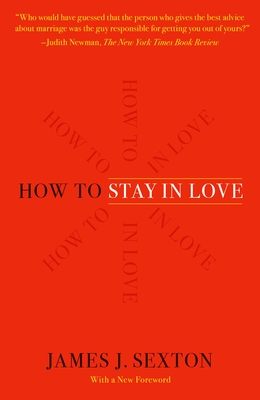
Resources
-
- National Domestic Violence Hotline: Leaving an Abusive Relationship
- Office on Women’s Health: Leaving an abusive relationship
- Healing Abuse Working for Change: Why Leaving is Hard
- National Domestic Violence Hotline: Relationship Abuse Safety Planning
- The Gottman Institute: The Four Horsemen: Criticism, Contempt, Defensiveness, and Stonewalling
- The Gottman Institute: The Four Horsemen: Contempt
- American Psychological Association: Divorce and child custody
- Healthy Children: Divorce and Separation: How to Help Your Child Adjust
- American Bar Association: Preparing for Divorce: A Guide for Clients
- American Bar Association: Choosing the Divorce Route That Is Best for You
- Journal of Obstetric, Gynecologic & Neonatal Nursing: The Dynamics of Leaving and Recovering from an Abusive Relationship
- Psychological Bulletin: Parental divorce and the well-being of children: a meta-analysis
- Journal of Marriage and Family: The Consequences of Divorce for Adults and Children
- Family Transitions: Does Shared Parenting Help or Hurt Children in High Conflict Divorced Families?
- Current Opinion in Psychology: Attachment Reorganization Following Divorce: Normative Processes and Individual Differences
- British Journal of Clinical Psychology: Adaptive and maladaptive rumination after loss: A three-wave longitudinal study
- Journal of Child and Family Studies: The Effectiveness of Interventions Targeting Interparental Conflict in Improving Family Outcomes: A Systematic Review
- Child Protection and Practice: Outcomes associated with childhood parental divorce: An umbrella review of meta-analyses
2 Million Readers.
1 Life-Changing Newsletter
Simple and Straight-to-the-Point...
Just Like Mel.